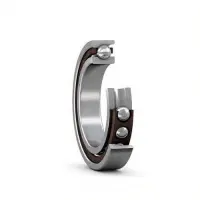
7009 ACD/P4ADGA
7000 Series Super Precision Angular Contact Ball Bearings
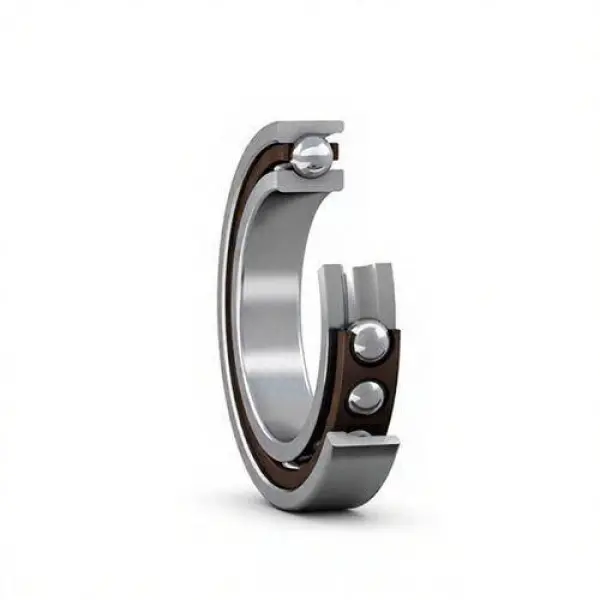

Image may differ from product. See technical specification for details.
Basic Information
Main Dimensions
Ball & Washer Dimensions
Performance
Materials
- Fast delivery
- Free shipping on orders over $200
- Enjoy discounts on bulk purchases
- Secure Payment
- Fast Global Shipping
7009 ACD/P4ADGA Bearing Product Overview & Core Advantages
The 7009 ACD/P4ADGA is a precision angular contact ball bearing designed for applications demanding exceptional rotational accuracy and rigidity. As a universally matchable (SU) bearing supplied in a set of two, it is engineered to accommodate combined loads—significant radial and axial loads in both directions—when mounted in specific arrangements (e.g., back-to-back or face-to-face). Its P4A tolerance class and extra light preload (Class A) ensure smooth, high-precision operation, making it an ideal choice for high-speed spindles and other high-rigidity applications.
7009 ACD/P4ADGA Bearing Model Code Explained, Specifications & Naming Convention
| Code Segment | Technical Meaning |
|---|---|
| 7009 | Basic bearing designation, indicating a 45 mm bore, 75 mm OD, and 32 mm width. |
| AC | Angular Contact design with a 25° contact angle. |
| D | Signifies a Universal Matchable (SU) bearing, designed to be paired in sets. |
| P4A | Indicates a high-precision tolerance class (superior to ABEC 7), governing dimensional and running accuracy. |
| DGA | Specifies the extra light preload (Class A), which minimizes friction and heat generation for optimal high-speed performance. |
7009 ACD/P4ADGA Bearing Structural Features & Performance Benefits
High Rigidity & Load Capacity: The angular contact design and the use of two bearings in a matched set create a highly rigid system capable of handling combined radial and axial loads from both directions simultaneously. This is critical for applications requiring minimal shaft deflection under load.
High-Speed Performance: The combination of a lightweight, durable phenolic cage, extra light preload, and high-precision manufacturing (P4A) allows for a high limiting speed of 41,000 rpm. This makes the bearing suitable for demanding high-speed applications.
Precision & Stability: Manufactured to P4A tolerance class with a 25° contact angle, this bearing provides exceptional running accuracy and low noise/vibration, ensuring consistent performance in precision machinery.
Material Quality: Constructed from chrome steel for both rings and balls, the bearing offers high durability, wear resistance, and a long operational lifespan.
7009 ACD/P4ADGA Bearing Typical Application Areas
The 7009 ACD/P4ADGA is ideally suited for high-performance machinery where precision, speed, and rigidity are paramount. Key applications include:
- Machine Tool Spindles (e.g., CNC milling, grinding, and turning centers)
- High-Speed Motors and Spindles
- Precision Robotics and Automation Equipment
- Medical Equipment (e.g., high-speed dental handpieces, centrifuges)
- Aerospace Actuation Systems and Instrumentation